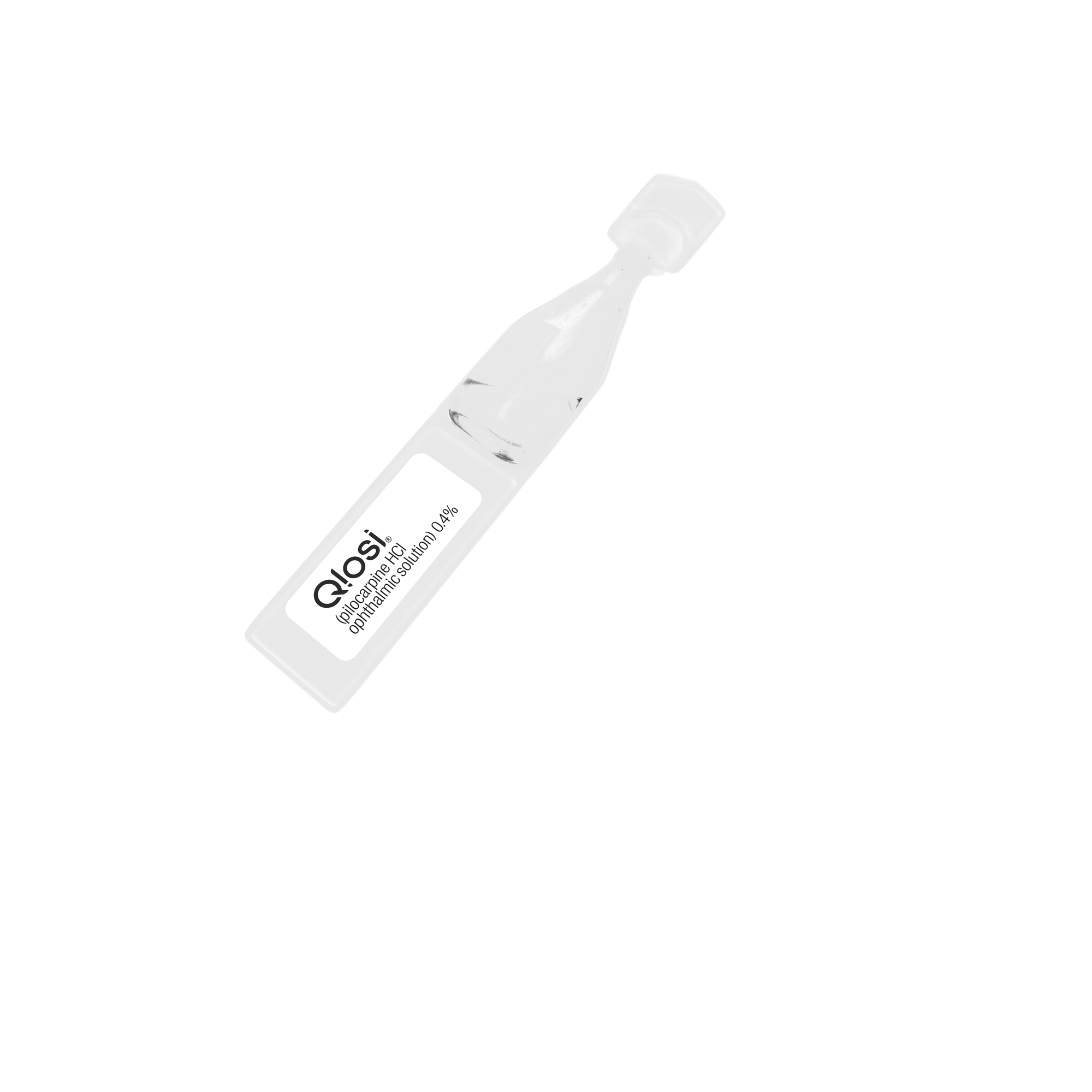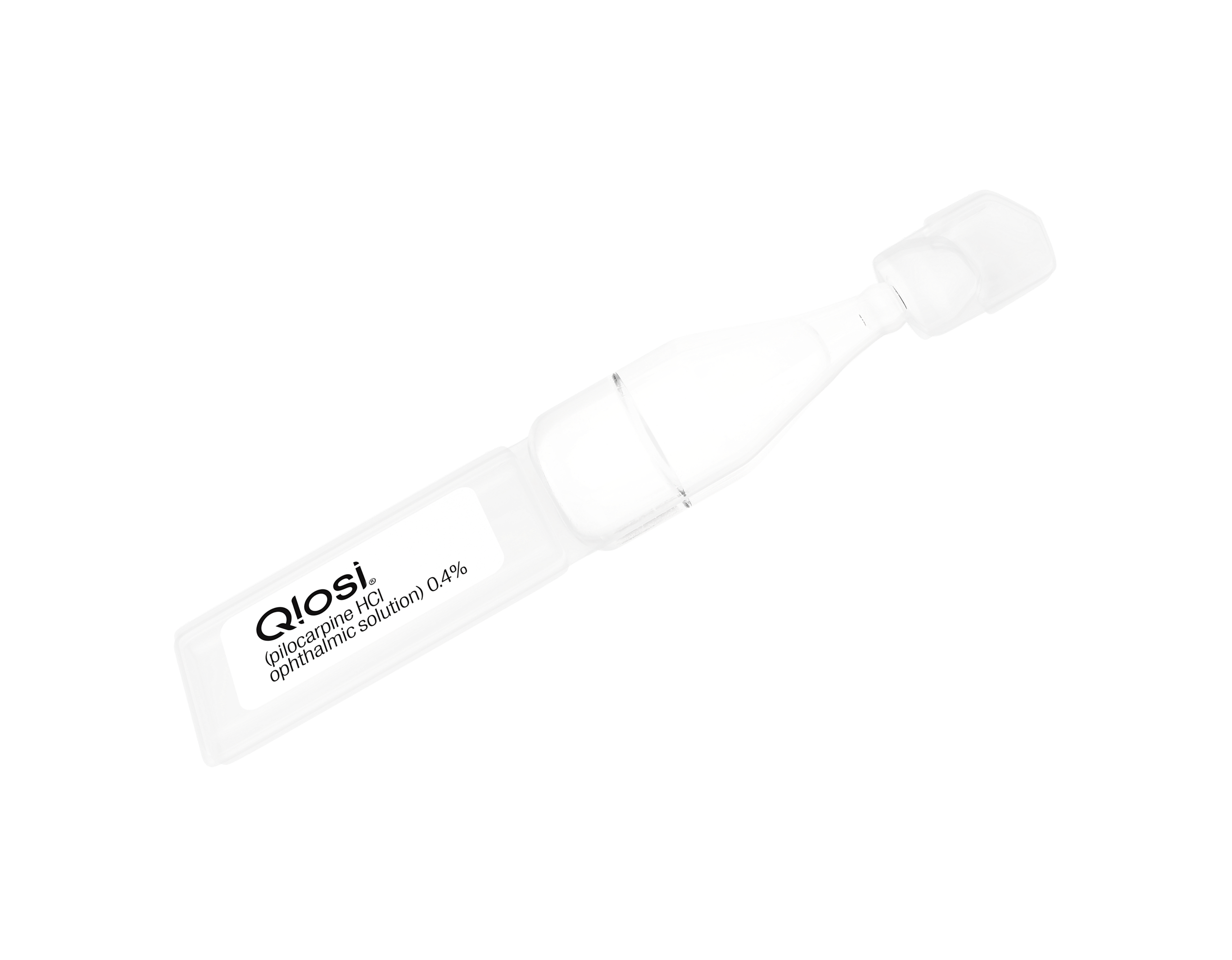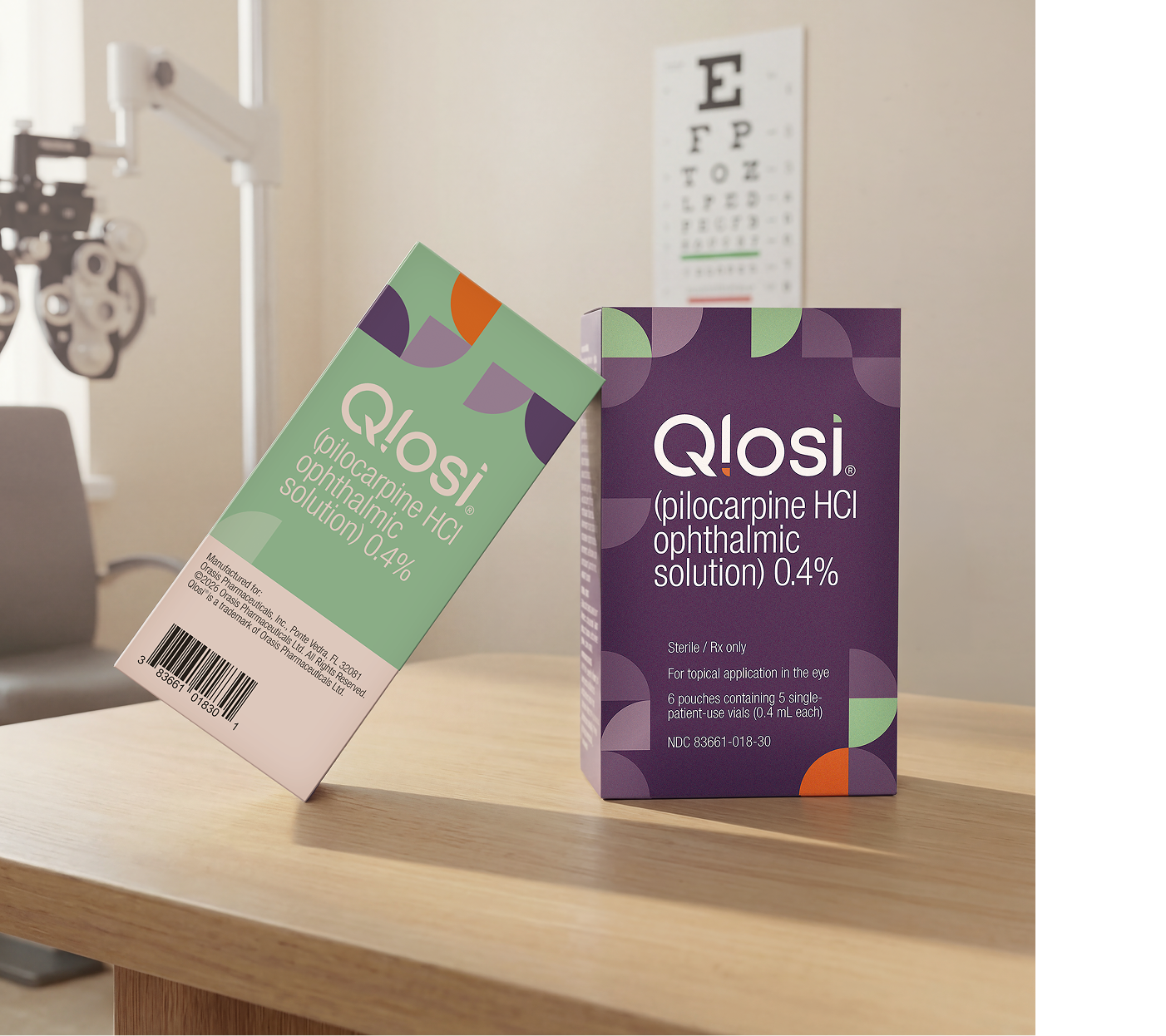
Qlosi Experience
Delivering moments designed for comfort
Developed with the lowest effective concentration of pilocarpine to minimize side effects experienced by presbyopia patients1

Well-established safety and tolerability profile across 5 clinical trials:1,2
-
No serious adverse events occurred with Qlosi
-
The most commonly reported adverse events were instillation site pain, and headache (5%-8%)
| |
Instillation site pain may resolve in seconds |
![]() |
In patients who reported mild headache, symptoms resolved in less than an hour, and in some patients resolution was significantly faster |
-
Qlosi is contraindicated in presbyopia patients with known hypersensitivity to the active ingredient or to any of the excipients
- Qlosi is not contraindicated for use with presbyopia patients who had LASIK procedures
Qlosi gave patients a comfortable experience1
Safety that stands apart
Across clinical trials, every Qlosi adverse event stayed in the single digits
Qlosi demonstrated single-digit incidence for all reported adverse events across clinical studies.
Qlosi1,2
(0.3% Pilocarpine)
Vuity"3,6"
(1.06% Pilocarpine)
VIZZTM7,8*
(1.44% Aceclidine)
Headache
4.8% moderate
16% moderate or severe
4% severe, 7% moderate
Instillation site pain/irritation
Blurred vision
Visual impairment
Conjunctival hyperemia
Ocular hyperemia
*Most common adverse reactions defined as adverse reactions reported in ≥5% of patients.
†Dim vision reported.
AEs=adverse events
Vizz™ is a trademark of LENZ Therapeutics, Inc. Vuity® is a registered trademark of AbbVie Inc.
Qlosi’s unique 0.4% concentration was specifically designed to optimize near-vision efficacy and minimize side effects.1,2,9,10
See more
Qlosi’s safety profile has remained consistent across clinical studies and real-world use, with 0 reported cases of retinal detachment (RD) to date.1
Retinal detachment (RD) is not unique to Qlosi—it’s a rare class effect associated with all miotics.1,11 Patients should be evaluated prior to prescribing.1,3,4,11
Qlosi’s lower concentration and controlled dosing help minimize the risk factors historically seen with older, higher-dose therapies.1,3,7
RD concerns are typically linked to factors not associated with Qlosi12:
-
Historical use of higher-concentration miotics
-
Initial use by non-ECPs using inconsistent patient monitoring
In clinical trials of Qlosi1:
-
No cases of RD were reported
-
No elevated or disproportionate RD incidence observed
In early real-world use12:
- No RD cases have been reported in the first [7] months of availability (source forthcoming)
Examination of the retina is advised prior to initiating therapy.