

Everything you
need in one place
The Qlosi Marketing Hub
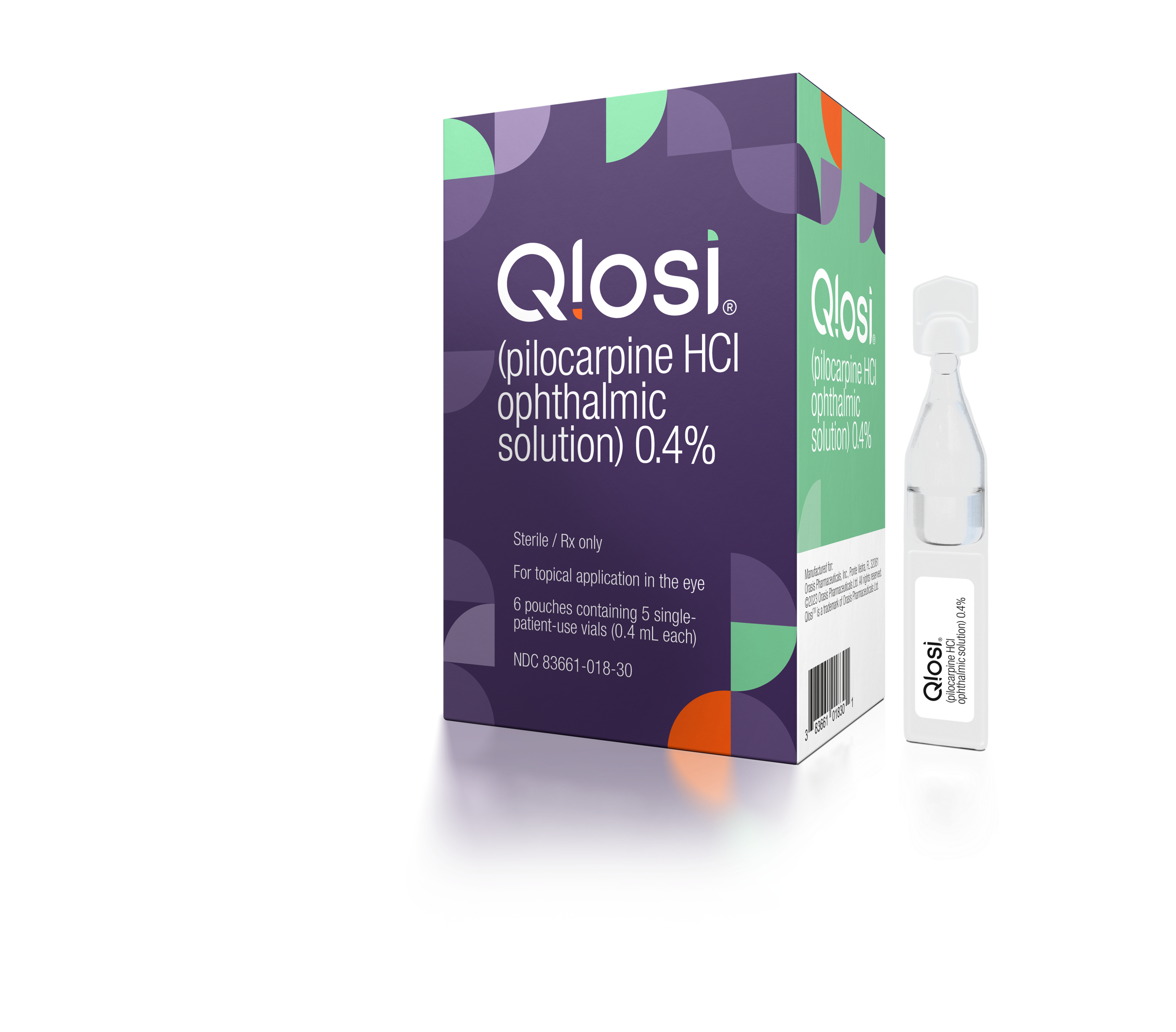
Not actual size
Approved, on-brand, and designed to make starting Qlosi conversations easier.
Hear from eye care professionals who’ve integrated Qlosi into their practices

→ Dr. Kevin Gee, OD Missouri City, TX
Patient Resources
Sign up for updates
Stay current on Qlosi clinical data, practice resources, and new patient support tools.
 Sign up →
Sign up for updates
Stay current on Qlosi clinical data, practice resources, and new patient support tools.
Frequently asked questions
Getting started with Qlosi
How do I prescribe Qlosi? +
Qlosi is available via prescription through BlinkRx specialty pharmacy. Write a prescription for Qlosi (pilocarpine ophthalmic solution) 0.4% and send it directly to BlinkRx. Your patient receives their delivery in about 5–7 days at no extra shipping cost.
Recommend a 60-vial pack as a starter; it gives patients flexibility to use it once or twice daily and offers better per-vial value ($1.65 vs $2.63 for 30 vials).
Reference: Qlosi [package insert]. Ponte Vedra, FL. Orasis Pharmaceuticals.
Who is the appropriate candidate for Qlosi? +
Strong candidates may include:
- Adults aged 40–65 years with symptomatic presbyopia who don’t want to rely on readers
- Patients with emerging presbyopia looking for a proactive solution
- LASIK/PRK patients who invested in visual freedom and want to preserve it
- Active patients whose lifestyle makes readers impractical
- Contact lens wearers frustrated with trade-offs
- Patients who have undergone surgery for cataracts and who seek supplemental near vision support
“The slam dunk candidate for Qlosi is the person that really doesn’t want glasses but is struggling. You give them Qlosi and they say, ‘Now I’m back to the way I was five, ten years ago.’”
— Dr. Brian Brightman, OD | Lincoln, NE
Reference: Qlosi [package insert]. Ponte Vedra, FL. Orasis Pharmaceuticals.
What should I do before prescribing? +
Perform a full fundus exam before initiating Qlosi, as you would with any miotic. Qlosi is contraindicated in patients with known hypersensitivity to any component. Exercise clinical judgment for patients with pre-existing retinal pathology or elevated risk for retinal detachment.
Reference: Qlosi [package insert]. Ponte Vedra, FL. Orasis Pharmaceuticals.
What can I tell patients to expect? +
Set expectations around 3 things1,2:
- The Clear Start Week: 2 doses daily for 7 days to establish neuroadaptation. Best results typically develop over 2 weeks of consistent use
- Onset: Near vision improvement may begin within 20 minutes. Some patients notice it faster
- Mild, transient side effects (eye discomfort, headache) may occur in the first few days and typically subside with continued use
“Getting ahead of any potential side effects is key to ensure a good patient experience. I let patients know that there may be some mild irritation, some mild headaches, but these effects are transient and they subside fairly quickly.”
— Dr. Harmin Chima, OD | Cleveland, OH
References: 1. Qlosi [package insert]. Ponte Vedra, FL. Orasis Pharmaceuticals. 2. Holland E, Karpecki P, Fingeret M, et al. Efficacy and safety of CSF-1 (0.4% pilocarpine hydrochloride) in presbyopia: pooled results of the NEAR phase 3 randomized, clinical trials. Clin Ther. 2024;46(2):104-113. doi:10.1016/j.clinthera.2023.12.005
Tolerability and safety
Is Qlosi safe given the history with pilocarpine? +
Qlosi’s profile is materially different from historical pilocarpine use. It carries the lowest effective concentration of any FDA-approved miotic (0.4%), which correlates with a significantly reduced adverse event burden.1-3
In the Bascom Palmer ciliary muscle thickness study, Qlosi 0.4% showed no statistically significant change in ciliary muscle thickness compared to balanced salt solution control; unlike 2% pilocarpine, which showed significant increases. This supports a ciliary-sparing profile.4
“My hesitation with trying Qlosi stemmed from the risk of retinal detachment associated with pilocarpine. When I did more research, I saw that there wasn’t a single retinal detachment in the clinical trials. That should give ECPs some assurance to overcome any hesitation.”
— Dr. Harmin Chima, OD | Cleveland, OH
References: 1. Qlosi [package insert]. Ponte Vedra, FL. Orasis Pharmaceuticals. 2. VIZZ PI [package insert]. Solano Beach, CA: LENZ Therapeutics, Inc. 3. VUITY PI [package insert]. North Chicago, IL: AbbVie Inc. 4. Cabot F. Miotic eyedrops for presbyopia: emerging therapies. Presented at Hawaiian Eye and Retina; Jan 17–23, 2026; Waikoloa Village, HI.
What are the most common adverse events? +
In clinical studies, the most common adverse reactions (5–8%) were eye pain upon instillation and headache. Both were predominantly mild. Most patients did not experience side effects. See the Adverse Events table on the Comfort page.
Reference: Qlosi [package insert]. Ponte Vedra, FL. Orasis Pharmaceuticals.
Any concerns about retinal detachment? +
No cases of retinal detachment were reported in the Qlosi clinical trials. The ciliary-sparing profile of Qlosi 0.4%, confirmed in the Bascom Palmer OCT study, supports a reduced tractional risk compared to higher-concentration miotics.1,2
Standard clinical practice applies: perform a full dilated fundus exam before initiating Qlosi and counsel patients with pre-existing retinal risk factors accordingly.
References: 1. Qlosi [package insert]. Ponte Vedra, FL. Orasis Pharmaceuticals. 2. Cabot F. Miotic eyedrops for presbyopia: emerging therapies. Presented at Hawaiian Eye and Retina; Jan 17–23, 2026; Waikoloa Village, HI.
What about headaches? +
Headache was reported in 6.8% of Qlosi patients in clinical studies and were predominantly mild. Most patients experience this early in treatment, if at all, and it typically resolves with continued use.
Reference: Holland E, Karpecki P, Fingeret M, et al. Efficacy and safety of CSF-1 (0.4% pilocarpine hydrochloride) in presbyopia: pooled results of the NEAR phase 3 randomized, clinical trials. Clin Ther. 2024;46(2):104-113. doi:10.1016/j.clinthera.2023.12.005
Practice fit and optical
Will Qlosi hurt my optical sales? +
This is the most common concern, and the data from practices using Qlosi consistently says no. Qlosi is an “and,” not an “or.” Patients who use Qlosi often still need and buy glasses and contacts.
“I don’t have a single patient who’s left the office with Qlosi and has not purchased glasses or contacts.”
— Dr. Harmin Chima, OD | Cleveland, OH
“We’ve actually seen an impact positively because we’ve seen a boost in multifocal contact lens success in conjunction with the use of Qlosi.”
— Dr. Kevin Gee, OD | Missouri City, TX
How does Qlosi fit into a busy clinical day? +
Qlosi requires minimal additional workflow. A brief conversation during the presbyopia discussion, an e-prescription, and an expectation-setting moment… that’s it! BlinkRx handles fulfillment and automated refill reminders.
“Introducing Qlosi into my practice day to day has been very simple. We’re already talking about their glasses, their contacts, the health of their eyes. Now it’s exciting to be able to tell them about a new treatment option. So it’s easy to introduce.”
— Dr. Brian Brightman, OD | Lincoln, NE
Does Qlosi replace contact lenses or progressive lenses? +
No, and that’s a feature, not a limitation. Qlosi works alongside existing correction lenses. It’s especially useful for the moments when glasses or contacts don’t work perfectly: sports, evening events, screen-heavy workdays.
“It’s like different pairs of shoes for different occasions. You may use Qlosi for some days, you may use your contacts for others, and you may use your glasses. It’s all a part of the vision correction options that you have.”
— Dr. Harmin Chima, OD | Cleveland, OH
Can I use it as a practice differentiator? +
Yes, and multiple ECPs in The Qlo Down series have described it exactly that way.
“Qlosi is a significant practice differentiator for us. When we offer the drops to patients who may not have heard of them, they’re often surprised that there’s even an option like this out there. If we can get those patients to be happy with a successful treatment, those patients are going to rant and rave about the practice.”
— Dr. Harmin Chima, OD | Cleveland, OH
The Qlo Down is content featuring real ECPs, like you. They’re talking about experiences with Qlosi: busting myths, chatting about patients it’s helped most, and sharing successes they’ve seen firsthand.
Dosing & patient management
What is the Clear Start Week? +
The Clear Start Week is a 7-day initiation protocol for new Qlosi patients. Patients use Qlosi twice daily, 2 doses in each eye, spaced 2–3 hours apart, for 7 consecutive days. This establishes neuroadaptation and typically leads to better long-term outcomes.
After the Clear Start Week, patients can use 1 or 2 doses per day based on their needs and schedule.1,2
References: 1. Qlosi [package insert]. Ponte Vedra, FL. Orasis Pharmaceuticals. 2. Holland E, Karpecki P, Fingeret M, et al. Efficacy and safety of CSF-1 (0.4% pilocarpine hydrochloride) in presbyopia: pooled results of the NEAR phase 3 randomized, clinical trials. Clin Ther. 2024;46(2):104-113. doi:10.1016/j.clinthera.2023.12.005
Can patients use Qlosi as needed rather than daily? +
Yes. Qlosi can be used daily or on demand, up to twice per day. For patients seeking longer coverage, a second dose may be administered 2–3 hours after the first dose. This flexibility is one of its key differentiators: patients can use it for specific high-need moments (work presentations, evening events, active mornings) without a rigid daily commitment.
Reference: Qlosi [package insert]. Ponte Vedra, FL. Orasis Pharmaceuticals.
What do I do at follow-up? +
A check-in 2–3 weeks after initiation is ideal. Assess near vision improvement, ask about any side effects, and reinforce the dosing flexibility. If the patient is using it only once daily, let them know they can add a second dose 2–3 hours after their first dose for up to 8 hours of clear near vision.
“I recommend a progress visit to find out what the patient’s expectation is and how much you’ve been able to address it. Qlosi falls right in place for that.”
— Dr. Kevin Gee, OD | Missouri City, TX
Reference: Qlosi [package insert]. Ponte Vedra, FL. Orasis Pharmaceuticals.
Pricing and access
How is Qlosi priced? Does it go through insurance? +
Qlosi is a cash-pay product — no insurance required, no prior authorization. Pricing is simple and transparent:
- 30-vial supply: $79 ($2.63/vial)
- 60-vial supply: $99 ($1.65/vial)
- Savings program available for eligible patients
Recommend prescribing the 60-vial pack as a starter. It offers better value and gives patients the flexibility to use once or twice daily without worrying about running out.
How does shipping work? +
Qlosi is fulfilled through BlinkRx specialty pharmacy. Patients receive their prescription in 5–7 days with free standard shipping. When it’s time for a refill, BlinkRx automatically sends a text or call to prompt reordering.
If a patient doesn’t receive a refill notification, they should contact BlinkRx directly: 1-866-799-2523.
Indication and Usage
Qlosi (pilocarpine hydrochloride ophthalmic solution) 0.4%, for topical ophthalmic use is a cholinergic receptor agonist indicated for the treatment of presbyopia in adults.
Important Safety Information
Contraindications
Hypersensitivity
Warnings and Precautions
Advise patients to not drive or operate machinery if vision is not clear (e.g., blurred vision). Exercise caution in night driving and other hazardous occupations in poor illumination.
Rare cases of retinal detachment have been reported with miotics. Examination of the retina is advised in all patients prior to initiation of therapy. Advise patients to seek immediate medical care with sudden onset of flashes of lights, floaters, or vision loss.
Qlosi is not recommended to be used when iritis is present.
Qlosi should not be administered while wearing contact lenses. Remove lenses prior to the instillation of Qlosi and wait 10 minutes before reinsertion.
Avoid touching the tip of the vial to the eye or any other surface.
Adverse Reactions
The most common adverse reactions (5% to 8%) are instillation site pain and headaches.
Please see full Prescribing Information here: qlosiecp.com/prescribing-information
References
- Qlosi [package insert]. Ponte Vedra, FL. Orasis Pharmaceuticals.
- Holland E, Karpecki P, Fingeret M, et al. Efficacy and safety of CSF-1 (0.4% pilocarpine hydrochloride) in presbyopia: pooled results of the NEAR phase 3 randomized, clinical trials. Clin Ther. 2024;46(2):104-113. doi:10.1016/j.clinthera.2023.12.005